How it Started
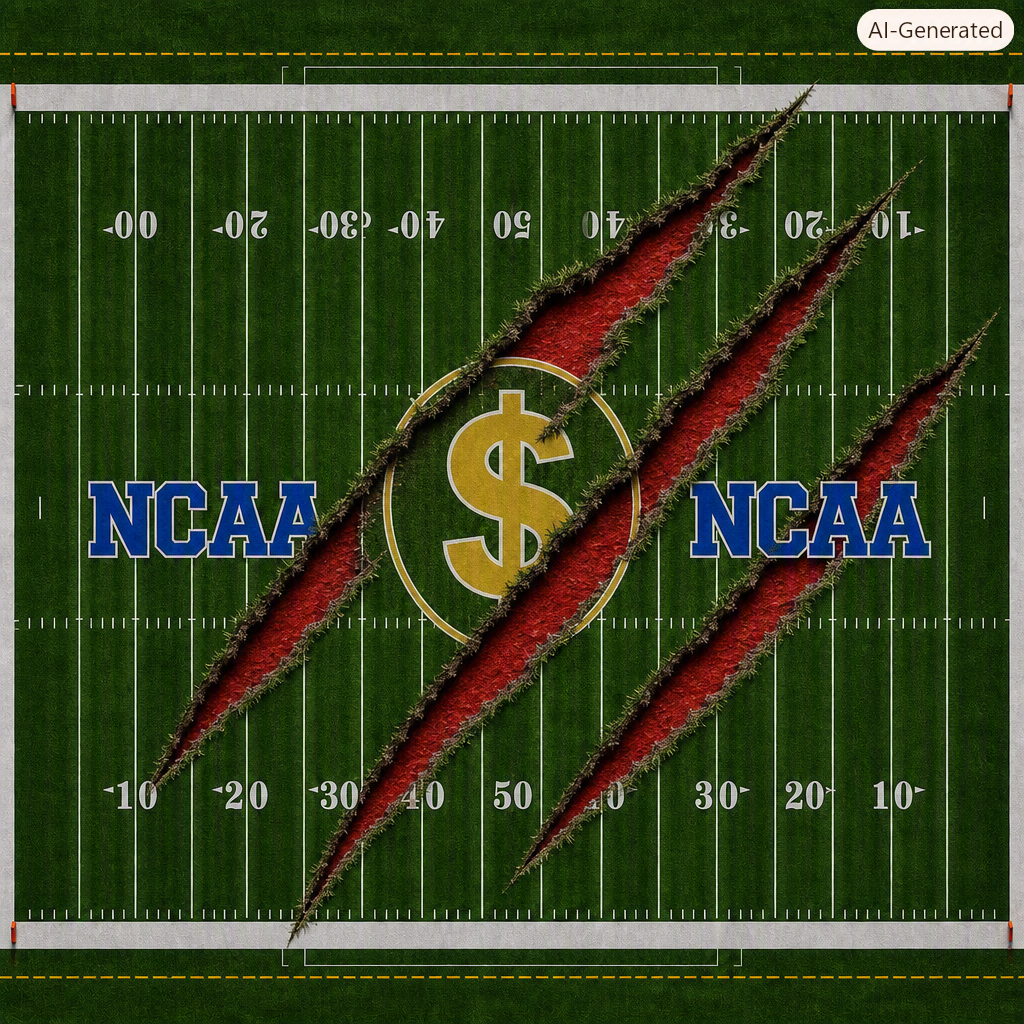
Baseball is America’s pastime, but football has surpassed it as America’s game. It’s that game, coupled with, sadly, something as equally American as greed, that is killing college athletics. While it seems like college athletics is unraveling at a chaotic pace, this began seemingly with an innocuous move over 20 years ago. That move, for all intents and purposes, started an avalanche that has collected players, coaches, teams, conferences, and more money than one could imagine in its wake. I wonder if we could go back in time to change that move; would we do so to see how things might change, if at all? But, as they say, you can’t put the toothpaste back in the tube, so how did we get here?
Conference realignment has been a constant in college athletics, but in the 2004-05 season, even if we didn’t know it, things changed. It was before that season that both the University of Miami and Virginia Tech would move to the ACC. The following season, Boston College would follow suit, leading to five teams heading to the Big East and six more off to Conference USA to fill those holes. As a result, conferences would never be the same, not because of better academic standing for their student-athletes or the betterment of the universities, but because they saw that moving forward, the most money would be coming from college football. Before the decisions by Miami, Virginia Tech, and those that followed, there hadn’t been a major conference team that changed affiliations to another major conference this century.
It took no time to see the impact the move of two teams would have. The Big East was left scrambling to secure the eight members needed to be recognized by the NCAA. The answer was to invite five members of Conference USA to join the conference. The University of Cincinnati, DePaul University, the University of Louisville, Marquette University, and the University of South Florida were the new members, but that, among other moves, gutted Conference USA, leaving it scrambling. They would fill the spots, but it became clear that what began as two institutions chasing the football dollar led to a giant game of musical chairs involving multiple conferences.
Big Conferences Get the Itch
Six years after the Boston College switch, the University of Nebraska would make the move to the Big Ten, and the University of Colorado would do the same to the Pac-12. Suddenly, that growing game of musical chairs exploded into an uncontrollable mosh pit at a concert. To put the shift into perspective, before Miami and Virginia Tech, no school had made a power-conference to power-conference move since 1996-97 when the Big Eight and Southwest conferences merged to form the Big XII. Once Nebraska made its jump, there were eight more such moves over the next three years.
Once the big conferences saw the money vision, it was full speed ahead. Full speed ahead, without any regard for how any of the expansion would impact student-athletes, other teams at the school (specifically Olympic sports), or the geographic footprint of the conference when it comes to logistics. If the move benefits football and can bring in more money, then it must be done. To the point that entering this season, the Big Ten, SEC, and Big XII account for 13.6% of the Division I basketball teams and a staggering 36% of the 138 college football teams.
Looking back at the disturbance that just two teams caused across the college landscape over twenty years ago, it’s easy to see how the seismic waves of the movement over the last decade have impacted college sports from top to bottom. While all the shifting can be fun for fans, introducing new rivalries and fan bases to each other, for those involved, from the players to the coaches to the schools to the conferences, the entire thing has become an unfortunate, unnecessary nightmare.
The Next Step
The influence of football’s money, for better or worse, hasn’t ended with conference realignment. It has led to many other avenues that have allowed the rich in college athletics to get even richer. Like realignment, it all started with something that didn’t seem like a big deal and made sense for everyone. But, like realignment, once the powers that be saw how it could benefit them most, things went off the rails, and that’s a phrase heard often in the last five years.
Conference realignment is just the tip of the iceberg that college athletics has run into. For decades, schools made money hand over fist off the backs of their student-athletes, and the athletes saw none of it, in the name of amateurism. The debate over whether or not athletes should see some of the benefits of their work has become more complicated as the money involved has increased. Over the last decade, sentiment has swayed in favor of the athletes, and like realignment, what seems like a good idea has turned out to be more than anyone involved has bargained for.
In July 2021, the NIL era began, allowing athletes to benefit from their Name, Image, and Likeness. The change ushered in a new era of college athletics, an era that can be described by one word thus far: chaos. Schools quickly realized that they would need a way to oversee and organize the money that comes along with this new era. Schools would soon form NIL collectives, which are funds used to collect the money schools raised to give to their athletes. This is where things began to get sticky.
The Money Begins to Flow
Schools have large piles of money with no real rules or regulations on how it is to be doled out. Athletic departments and the biggest benefactors to their collectives could potentially use their influence to urge student-athletes to enter the transfer portal and land at their school. The number of athletes entering the portal would soon explode. Before the NIL era, 268 football players entered the portal in 2019, along with 208 men’s basketball players. By 2022, those numbers jumped to 2,277 football players and 864 hoopers. This past season, the football portal saw 3,666 entrants, while the basketball portal saw over 1,400 players enter.
By mid-2022, frustrated by the lack of guidance and regulations, conference commissioners were asking Congress for help. By early 2023, things were getting very messy, both on the gridiron and the court. Highly touted high school quarterback Jaden Rashada changed his commitment from Miami to the University of Florida, but then had his deal with the Gator Collective voided. He would then land at Arizona State University in a deal worth $13 million. Speaking of Miami, booster John Ruiz, who was influential in bringing Nigel Pack to Coral Gables, was found to have had impermissible contact with women’s basketball twins Haley and Hannah Cavinder, which resulted in Miami head coach Katie Meier sitting out the first three games of 2023.
Since the advent of NIL, the amount of money spent has skyrocketed in five short years. In 2021, over $900 million was spent, with the largest portion coming from commercial NIL deals. With a year of experience, from 2022-25, those numbers would flip. Over that time, $4.57 billion was spent, and $3.147 billion of that came from collectives. The top two beneficiaries of this financial boom were football and men’s basketball. The overflowing transfer portal, coupled with these new revenue streams, turned college athletics into a Capitol Hill of sorts, with lobbyists (boosters) using their financial weight to influence outcomes without necessarily having the best interests of constituents (student-athletes) in mind.
Things Go Off the Rails
It was in this period of financial and academic chaos that serious problems and questions within the new era of college sports would grow louder. During that time, I talked to many coaches, and whether they lamented the new era or were eager to adapt to it, they all clamored for one thing: structure in this new world. There has been little to no guidance from the NCAA during this time, but that didn’t stop schools and conferences from escalating the proverbial arms race while begging for assistance.
Coaches said things like guardrails, off the rails, chaos, and free agency when describing the environment from 2022-25. The NIL era opened up a Pandora’s box of issues, spearheaded by the exploitation of the system that was available to them. The biggest irony of it all is that those at the forefront of asking for congressional help are the same people who are using the system to their utmost advantage, namely Commissioner Greg Sankey and the SEC.
Things shifted dramatically on June 1, 2025, when what would become known as the House settlement was ratified. The court decision paved the way for schools to begin paying their athletes directly. Schools could choose to opt in to revenue sharing with student-athletes, but that sharing would be capped at around $20 million per school. These payments would be in addition to any NIL deals an athlete may have. Over the next ten years, the cap could jump as much as $8 million, leaving power-conference schools in a position where up to 50% of their athletic revenue is being used to compensate athletes. At power-four schools with strong football programs, as much as $15 million of that cap was spent on football, while schools with stronger men’s basketball programs got a bigger piece of the pie.
Due to the House settlement, over half of the $2.75 billion spent compensating athletes came from the schools themselves. All of this means that the financial inequities across the nation and within athletic departments themselves will continue to grow. The average allocation per school in the Power Four conferences is just over $20 million, but in the Group of 6 conferences, that number is just $4.3 million. In those departments, over 60% of that money goes to football, and between 20-22% goes to men’s basketball. Women’s basketball and the remaining Olympic sports account for the rest, that is, if the Olympic sports are still part of the athletic department.
With schools needing to come up with money to pay their athletes, some schools have resorted to cutting programs such as tennis and track and field. The University of Arkansas is one of those schools, choosing to cut tennis, citing that it wasn’t sustainable, before a big donation persuaded them to reinstate the program.
The Impact of Greed
So, what kind of impact has all of this money and chaos had on college sports? First, conferences are now looking for more ways to increase revenue to pay for their more expensive football rosters. One of the biggest ways they’ve done this is postseason expansion. Both the College Football Playoff and the NCAA Tournament have grown. The CFP has automatic qualifiers for the Power Four conferences and the best from the Group of 6. The remaining slots are selected using the typical criteria, such as strength of schedule and quality wins. Likewise, the NCAA Tournament will expand to 76 teams in 2026-27, adding eight additional spots.
The Power Four championed both of these moves as being good for their sports, as being even more inclusive than before. The problem is, the selection process often favors those in power conferences, except in extraordinary cases. Tournament expansion is another attempt at hoarding more money by those who exploited an unmonitored neo-NIL system and now claim money is a problem now that the majority of those payments are coming out of their pockets. Another thing that has become more prevalent lately is high-profile made-for-TV neutral-site games. These games get fans excited, but they are also a way for power schools to give themselves yet another payday.
From a coaching perspective, the advent of NIL and pay for play has made the profession even more encompassing. Not only must staffs now coach, scout, and recruit, they now must recruit their own players every year to keep them out of the transfer portal and away from teams that may want to poach them.
The rigors of an already exhausting profession have been felt on the court in a big way. In 2022, Jay Wright stepped away from Villanova University; two years later, Tony Bennett would do the same at Virginia. Over the last two seasons, both Bruce Pearl (Auburn University) and Thad Matta (Butler University) walked away, with all four of them citing the new age of college athletics as part of the reason for their departures. In late June, the head coach of the national champion, the University of Michigan Wolverines, Dusty May, would leave college for the NBA and the Dallas Mavericks. May has previously talked about how the new era is difficult on coaches; the lack of guardrails and instability in the college landscape were catalysts in his decision to leave.
Another widely discussed impact of this era has been the continued deterioration of loyalty in college sports. We’ve talked about the explosion of the transfer portal, but this is also happening on the coaching side. Look at the college basketball coaching carousel every summer, where coaches are shuffling at the high-major level. The poster child for this diminishing loyalty has to be Lane Kiffin, who left Ole Miss in the middle of a run to the College Football Playoff to take the job at Louisiana State University. This is just another example of schools no longer looking out for the best interest of their student-athletes, but looking out for what will make them the most money.
After reading All the President’s Men, which is about Richard Nixon and the Watergate scandal, what took place was described as pulling on the loose strand of a rug and continuing to pull until the entire thing unravels. It seems like the analogy is apt for the current state of college athletics. Twenty-two years ago, when Miami and Virginia Tech moved to the ACC, the strand on the rug was pulled. The urge to pull on the strand is irresistible, and now the rug has lost its structure, with fewer and fewer people wanting to claim ownership of it. Before much longer, all that will be left is a big ball of mess that used to be something beautiful, all in the name of football.
If you’ve ever needed better online security and wanted to save a ton of money while doing so, make sure you check out this link! We’ve partnered with NordVPN to get you 65%+ off at the link below. Sansom Sports Media is happy to partner with them to keep our connections safe, and you should consider it as well! https://go.nordvpn.net/aff_c?offer_id=1002&aff_id=147031